
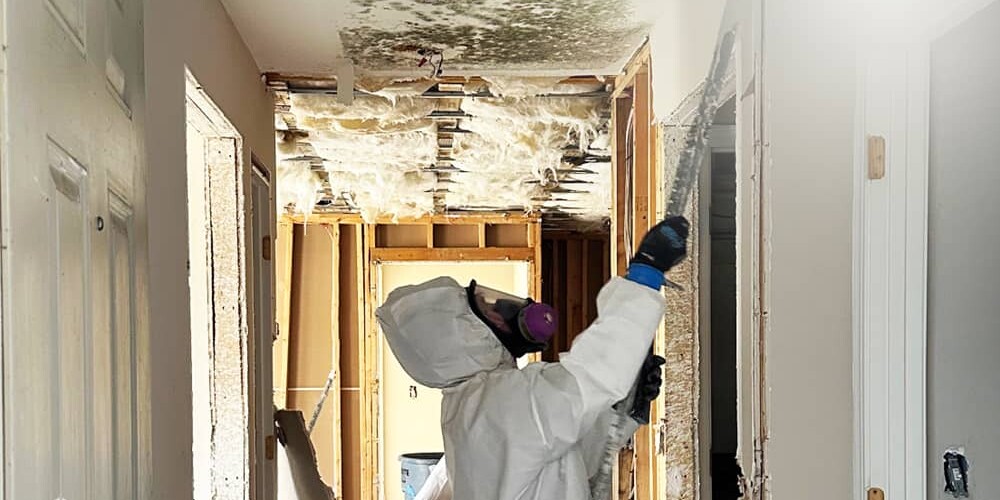
A tenant called after a major rainstorm to report water coming into their conference room.
At first glance, it looked like a routine service call. The building was less than a year old, and the visible damage appeared limited to some wet carpet near a storefront window.
It wasn’t.
By the time our team completed a full inspection of the property, we had discovered water intrusion issues throughout nearly every unit in the building. What started as a single tenant complaint uncovered a problem that could have led to more than $200,000 in repairs if it had remained hidden.
Emergency response starts long before the emergency. The right plan, the right partner, and the right response can mean the difference between a contained incident and a six-figure disruption.
One Leak Turned Into a Building-Wide Discovery
When water enters a building, the visible damage is rarely the whole story.
While onsite, our team recommended inspecting the rest of the property instead of focusing solely on the affected suite. That decision quickly paid off.
As we moved from unit to unit, we found signs of water intrusion in occupied spaces, vacant spaces, and areas where tenants had not yet noticed a problem.
What initially appeared to be one isolated leak was actually a building-wide issue.
The Rainstorm Wasn’t the Problem
The storm simply exposed weaknesses that were already there.
Our investigation revealed drainage deficiencies that allowed water to enter multiple areas of the building during heavy rainfall. Additional vulnerabilities around the building envelope and storefront window systems created more opportunities for water to get inside.
Because the property was newly constructed, many of these issues had not yet had enough time to reveal themselves.
The rainstorm accelerated the discovery. Fortunately, it happened before extensive damage had a chance to develop.
The Difference Between Drying and Rebuilding
Water damage gets more expensive with time.
Because the moisture was identified quickly, affected materials could be dried before permanent damage occurred. Had the water remained trapped for days, weeks, or multiple storm events, the outcome would have been much different.
Carpet would likely have to be replaced.
Drywall would have begun to deteriorate.
Wood framing could have started to rot.
Mold growth would have become increasingly likely, especially in vacant or unconditioned spaces where moisture often goes unnoticed.
At a certain point, a drying project becomes a reconstruction project.
How Fast Action Prevented a Major Loss
The real value in this project was not what was repaired. It was what was avoided.
By identifying the issue early and expanding the inspection beyond the original complaint, the property owner was able to address the underlying problem before significant secondary damage occurred.
Had the water intrusion continued unchecked throughout multiple units, repair costs could have escalated dramatically. Flooring replacement, drywall repairs, mold remediation, framing repairs, tenant disruption, and reconstruction expenses can quickly turn a manageable issue into a six-figure loss.
Instead, the problem was discovered while solutions were still relatively straightforward.
What Every Property Owner and Asset Manager Can Learn From This
Most major property losses do not start as major property losses.
They start as a small leak.
A damp carpet.
A water stain.
A tenant complaint that seems isolated.
The most costly mistake a property owner can make is assuming the visible damage is the entire problem.
When water intrusion occurs, there is always value in looking beyond the immediate area. A broader inspection can reveal hidden issues before they have the opportunity to spread, worsen, and become exponentially more expensive.
The Most Expensive Water Damage Is the Damage You Can’t See
In this case, one tenant’s phone call uncovered a building-wide issue.
Without a thorough inspection, those problems may have remained hidden until mold developed, materials deteriorated, or additional storms caused even greater damage.
The lesson is simple: when water gets in, investigate early and investigate thoroughly.
A quick response today can prevent a much larger problem tomorrow.
A Final Takeaway for Property Owners and Asset Managers
This project also highlights the value of knowing your property’s condition before a loss occurs. When owners have current photos, videos, drone imagery, or property condition assessments documenting the building before damage happens, it becomes much easier to identify new issues and support an insurance claim.
A simple annual property walk with updated documentation, especially before storm season, can provide a valuable baseline. Just as a broader inspection helped uncover hidden problems in this case, having pre-loss documentation can help property owners identify damage faster, resolve claims more efficiently, and avoid costly disputes down the road.